


05 Feb Who Can Get Dental Implants?
Dental restorations are treatments that repair or replace missing and damaged teeth, and with solutions like implants, they are integrated directly into the jawbone. From simple fillings and crowns to bridges and dentures, these procedures aim to return the mouth to a functional state while improving symmetry. When a tooth is lost due to injury, decay, or disease, it leaves a gap that can affect chewing ability and speech. Here’s more information on dental implants and who can benefit from them:
How Dental Implants Restore Oral Function
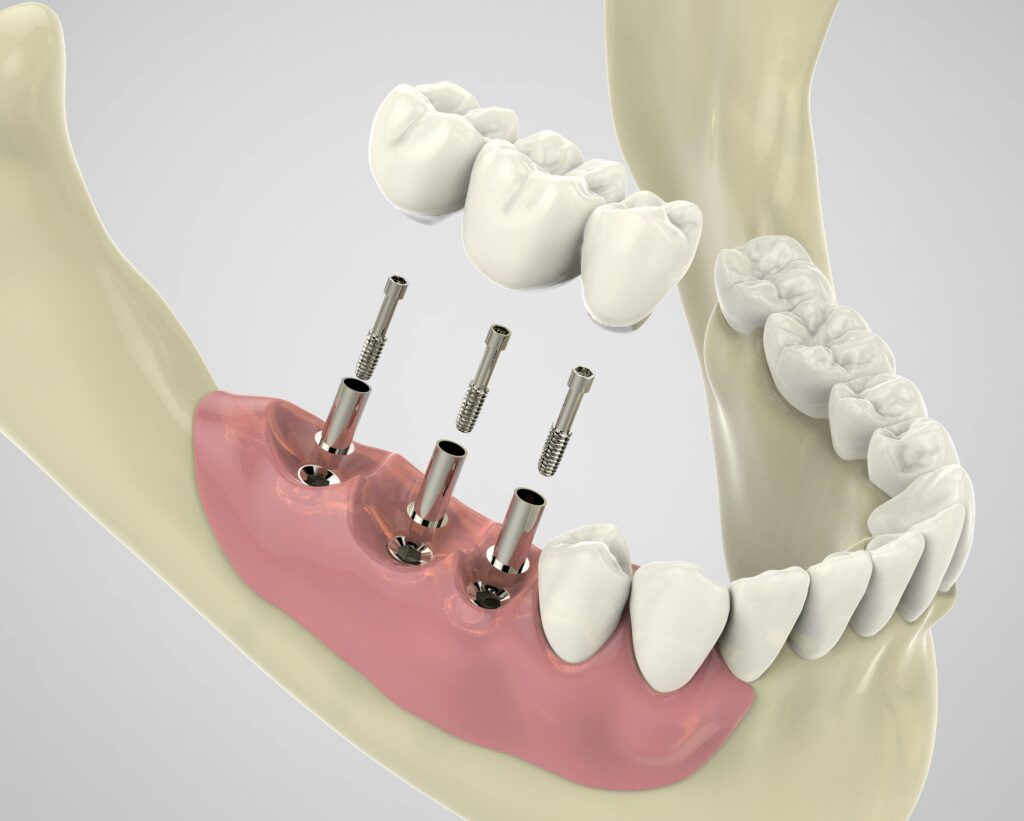
A dental implant is a small, screw-like post that serves as a substitute for the root of a missing tooth. Surgeons place this post surgically into the jawbone beneath the gum line. Once in place, it provides a sturdy foundation for a replacement tooth restoration, such as a crown, or for an implant-supported bridge or denture. Implants are often titanium, and this material is biocompatible, allowing the jawbone to fuse with the implant in a process called osseointegration.
Why Are Implants Beneficial?
Losing a tooth initiates a process of bone resorption, where the jawbone begins to deteriorate because it lacks the stimulation previously provided by the tooth root. Dental implants mimic the function of natural roots, transmitting chewing forces to the jawbone and helping to maintain bone density. Implants replace one or more missing teeth without affecting adjacent healthy teeth, and they can be used to support other restorations.
How Can They Improve Your Health?
By filling the gap left by a missing tooth, implants also prevent adjacent teeth from shifting into the empty space. This helps maintain proper bite alignment and stability. Unlike a traditional bridge, which requires grinding down neighboring teeth to support it, an implant supports itself. People who struggle with loose or uncomfortable dentures may turn to implants to stabilize their prosthetics, allowing them to speak and eat more easily.
How Oral Health Impacts Your Candidacy
Determining candidacy for dental implants involves a thorough evaluation of your oral and general health; you have to be healthy enough to undergo surgery. Successful implantation requires healthy gums and sufficient jawbone density to support the titanium post. If the jawbone is too thin or soft, the implant may not be able to withstand the forces of chewing.
Dentists will also review your medical history, as conditions like diabetes or treatments like radiation therapy may affect healing. For this dental restoration, your mouth must be free of periodontal disease. Infections in the gums can compromise the tissue surrounding an implant. While age is rarely a disqualifying factor, growing children are generally not candidates because their jawbones are still developing.
What the Implant Process Is Like
The process of receiving dental implants typically occurs in multiple stages over several months. During the first appointment, the dentist or oral surgeon performs the placement surgery, inserting the implant post into the jawbone. A healing period of several months is necessary; this allows osseointegration to occur, creating a solid bond between the bone and the titanium post. Your provider may have you wear a temporary crown or denture as you heal.
This multi-step approach is necessary for stability and allows your soft tissue to heal properly around the new structure. Once osseointegration is complete, the second stage involves the following steps:
- Creating the Abutment: The abutment serves as the connector between the implant and the final restoration. Your provider will custom-make a crown or bridge that matches the color and shape of your natural teeth.
- Attaching the Abutment: The dentist attaches the abutment to your implant, enabling you to chew and speak more effectively.
Learn More About Dental Implants
Understanding whether dental implants are the right choice requires a professional consultation. To restore function and stability to your smile, contact a dental office to schedule a consultation today. A dentist will assess your oral health, and they can determine which restorations may suit your needs.
- Do Gastroenterologists Do Colonoscopies? A Complete Patient Guide
- What Is GW Gastroenterology and What Services Does It Offer?
- What Is NP Gastroenterology and What Does a Gastroenterology Nurse Practitioner Do?
- What Does Gastroenterologiczna Mean in Medical Terms?
- Is Gastro Digest Good for Everyday Digestive Support?
Sorry, the comment form is closed at this time.