


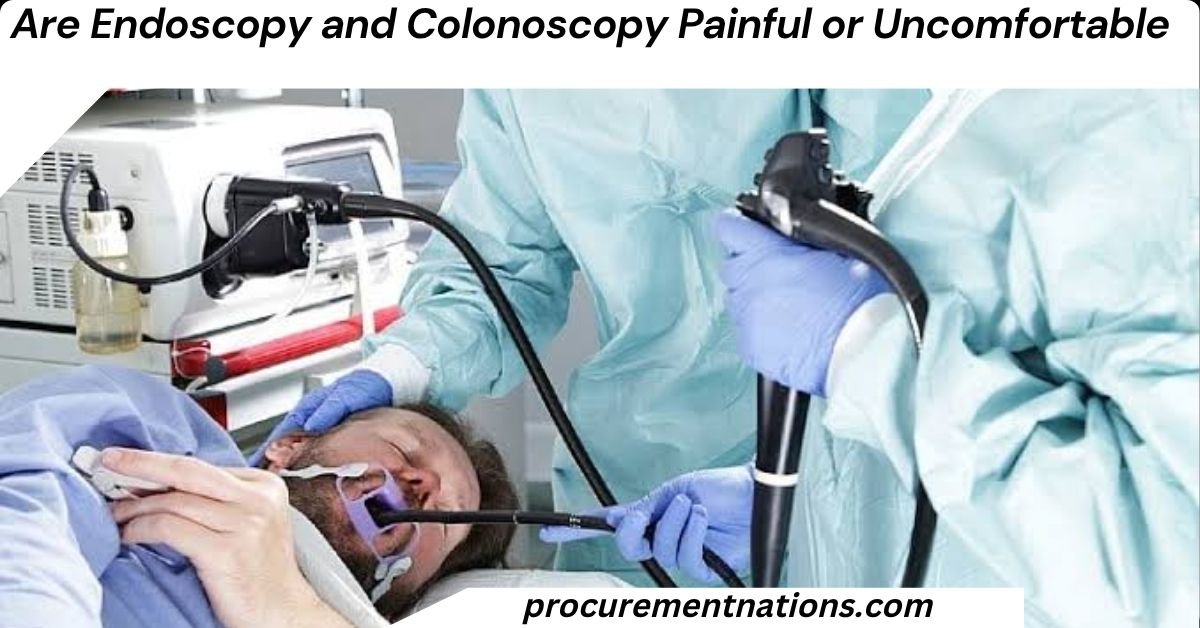
29 Aug Are Endoscopy and Colonoscopy Painful or Uncomfortable?
Endoscopy and colonoscopy are common medical procedures used to look inside different parts of the digestive system. Although they are often mentioned together, they examine different areas and are used for different reasons. An upper endoscopy looks at the upper digestive tract, while a colonoscopy examines the large intestine.
Many people searching for “endoscopy and colonoscopy” want to know what these procedures are, why doctors recommend them, how to prepare, whether they hurt, whether they will be awake, and how long the appointment takes. These are reasonable questions, especially if you have never had either procedure before.
The good news is that both procedures are commonly performed in the United States. Doctors use them not only to investigate symptoms but also to find abnormal tissue, take biopsies, remove certain growths, and treat some digestive problems.
This guide explains endoscopy and colonoscopy in simple language, including preparation, sedation, procedure time, recovery, possible risks, screening, and questions to ask your healthcare provider. Medical recommendations can vary based on your age, symptoms, medical history, medications, and individual risk factors, so your own healthcare team’s instructions should always take priority.
What Are Endoscopy and Colonoscopy?
An endoscopy is a procedure that uses a flexible tube with a small camera to examine part of the digestive tract.
When people use the word “endoscopy,” they may be referring to an upper gastrointestinal endoscopy, also called an upper endoscopy, EGD, or esophagogastroduodenoscopy. This procedure allows a doctor to examine the esophagus, stomach, and first part of the small intestine, called the duodenum.
A colonoscopy uses a similar flexible camera instrument called a colonoscope. It is passed through the rectum so the doctor can examine the rectum and colon, which make up most of the large intestine.
In simple terms:
- Upper endoscopy examines the upper digestive tract.
- Colonoscopy examines the large intestine.
- Both can allow doctors to take biopsies.
- Both may allow doctors to remove certain abnormal growths.
- Sedation is commonly used, although the exact approach varies.
- Both procedures are usually performed in a hospital or outpatient facility.
Sometimes a healthcare provider recommends having an upper endoscopy and colonoscopy during the same visit. This can be convenient because the patient may only need one preparation and one recovery period, depending on the medical situation and facility.
Endoscopy vs. Colonoscopy: What Is the Difference?
The biggest difference between endoscopy and colonoscopy is the part of the digestive system being examined.
| Feature | Upper Endoscopy | Colonoscopy |
| Main area examined | Esophagus, stomach, duodenum | Rectum and colon |
| Scope entry | Mouth | Rectum |
| Common reasons | Heartburn, swallowing problems, upper abdominal symptoms, ulcers, bleeding | Bowel changes, rectal bleeding, abdominal symptoms, polyps, colorectal cancer screening |
| Preparation | Fasting before procedure | Bowel-cleansing preparation |
| Typical procedure time | About 10–20 minutes | Usually less than 1 hour |
| Biopsy possible? | Yes | Yes |
| Polyp removal possible? | Certain growths may be removed | Colon polyps can often be removed |
| Sedation | Often used | Often used |
| Ride home | Usually required when sedation is used | Usually required when sedation or anesthesia is used |
The exact timing and preparation can differ from one medical center to another.
Why Do Doctors Recommend an Upper Endoscopy?
An upper endoscopy can help doctors investigate symptoms and conditions affecting the upper digestive tract.
A doctor may recommend one if you have symptoms such as:
- Ongoing heartburn
- Trouble swallowing
- Pain in the upper abdomen
- Repeated vomiting
- Unexplained weight loss
- Signs of bleeding
- Certain problems involving the esophagus or stomach
Upper endoscopy can help identify conditions such as gastroesophageal reflux disease, ulcers, Barrett’s esophagus, celiac disease, and some cancers. Doctors can also use the procedure to take tissue samples or treat certain sources of bleeding.
An endoscopy is not automatically necessary for every person with digestive symptoms. Your doctor considers how long the symptoms have lasted, their severity, your age, medical history, medications, and other risk factors.
Why Do Doctors Recommend a Colonoscopy?
A colonoscopy can be used for both diagnosis and screening.
Doctors may recommend a colonoscopy if someone has:
- Rectal bleeding
- Persistent changes in bowel movements
- Ongoing diarrhea
- Abdominal pain
- Unexplained weight loss
- Abnormal results from another colorectal test
- A history of colon polyps
- Certain family or personal risk factors
Colonoscopy is also an important tool for colorectal cancer screening. It allows the doctor to see the lining of the colon directly and remove many polyps during the same procedure.
Removing certain precancerous polyps can be an important part of colorectal cancer prevention because some colorectal cancers develop from polyps over time.
When Should Adults Have Colorectal Cancer Screening?
For average-risk adults without symptoms, the U.S. Preventive Services Task Force recommends colorectal cancer screening beginning at age 45. The recommendation applies to adults ages 45 to 75. For adults ages 76 to 85, screening may be considered selectively based on overall health, previous screening, and personal preferences.
Colonoscopy is one screening option, but it is not the only one. Other recommended approaches include stool-based tests and certain imaging or visualization tests. The best choice depends on individual circumstances.
A commonly cited screening schedule is colonoscopy every 10 years for average-risk adults when colonoscopy is selected as the screening method. Other tests have different schedules.
Importantly, screening recommendations for average-risk people are different from diagnostic testing. Someone with symptoms or a strong family history may need evaluation earlier or more often.
Talk with your healthcare professional about when you should start screening and which test is appropriate for you.
How Long Does a Colonoscopy and Endoscopy Take?
One of the most common questions is, “How long does a colonoscopy and endoscopy take?”
The actual procedure is usually shorter than the total time spent at the medical facility.
An upper endoscopy typically takes about 10 to 20 minutes, although additional time may be needed for biopsies or treatment.
A colonoscopy usually takes less than one hour.
If both procedures are performed during the same appointment, the procedure time will naturally be longer than either test alone. The exact duration depends on factors such as the reason for the procedures, whether biopsies or polyps are found, the type of sedation, and how quickly you recover.
You should also plan for preparation, check-in, paperwork, sedation, recovery, and discharge. The total visit can therefore take several hours even though the actual examinations may be relatively short.
Are You Awake During a Colonoscopy and Endoscopy?
Another common question is, “Are you awake during a colonoscopy and endoscopy?”
The answer depends on the type and level of sedation used.
For upper endoscopy, many people receive a sedative to help them relax and remain comfortable. Some people fall asleep during the procedure. In some cases, an upper endoscopy may be performed without sedation.
For colonoscopy, sedatives or anesthesia are commonly used to make the procedure more comfortable and reduce awareness. The exact approach varies among patients and medical facilities.
Being sedated is not necessarily the same as being completely unconscious. Different levels of sedation exist. Your healthcare team should explain which medication or anesthesia plan they expect to use.
If you are nervous about being awake, tell your medical team before the procedure. They can explain what you are likely to experience.
What Happens Before an Endoscopy?
Preparation for an upper endoscopy is generally simpler than preparation for a colonoscopy.
Your doctor will give you instructions about when to stop eating and drinking. NIDDK notes that some people may be asked not to eat or drink for up to eight hours before an upper endoscopy, although instructions can vary.
You should also tell your healthcare team about:
- Prescription medicines
- Over-the-counter medicines
- Blood thinners
- Aspirin or antiplatelet medicines
- Diabetes medicines
- Iron supplements
- Vitamins
- Herbal products
- Medication allergies
- Heart or lung conditions
- Previous reactions to sedation or anesthesia
Do not stop a prescribed medication on your own. Your doctor will tell you whether any medication needs to be changed before the procedure.
What Happens Before a Colonoscopy?
Colonoscopy preparation is usually more involved because the colon needs to be clean.
Food or stool remaining in the colon can block the doctor’s view. For this reason, patients are given detailed bowel-preparation instructions.
Preparation may include:
- Changing your diet before the procedure.
- Eating lower-fiber foods for a specified period.
- Switching to clear liquids when instructed.
- Drinking a prescribed bowel-cleansing solution.
- Taking laxatives according to the instructions.
- Staying near a bathroom because the preparation causes frequent bowel movements.
- Stopping food and liquids at the time specified by your healthcare team.
The exact bowel preparation differs among patients.
Some people find bowel preparation to be the hardest part of a colonoscopy. Planning ahead can make it easier. Keep approved clear liquids available, stay close to a bathroom, and carefully follow the written instructions.
If you become very sick or cannot complete the bowel preparation, contact your healthcare provider rather than simply skipping the rest.
What Can You Eat Before a Colonoscopy?
Your medical center should give you specific dietary instructions because preparation plans vary.
Depending on the instructions, you may be asked to avoid foods that contain a lot of fiber, including some whole grains, raw vegetables, beans, nuts, and seeds. Before the procedure, you may be instructed to consume clear liquids.
Clear liquids may include options such as:
- Water
- Certain sports drinks
- Clear broth
- Plain tea
- Plain coffee without milk or cream
- Certain pulp-free juices
- Some types of gelatin
Your medical team may tell you to avoid particular colors or products because they can make the examination harder to interpret.
Do not rely on a generic internet diet if your facility has provided different instructions. Your facility’s instructions are the most important source for your specific preparation.
What Happens During an Upper Endoscopy?
Before an upper endoscopy, a healthcare professional may place an IV in your arm or hand so medication can be given. Your throat may also be numbed with a spray or liquid medicine.
You will usually lie on your side.
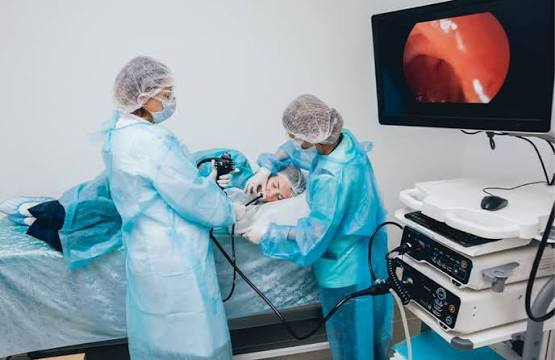
The doctor carefully guides the endoscope through the mouth and into the esophagus, stomach, and duodenum. A small camera sends images to a monitor.
The scope can introduce air into the digestive tract to improve visibility.
During the procedure, the doctor may:
- Examine irritated tissue
- Look for ulcers
- Identify abnormal growths
- Take biopsies
- Investigate bleeding
- Treat certain sources of bleeding
- Perform other specialized treatments when appropriate
A biopsy involves removing a very small sample of tissue for laboratory testing. Patients generally do not feel the biopsy being taken.
What Happens During a Colonoscopy?
For a colonoscopy, you will usually receive an IV for medication and lie on an examination table.
The colonoscope is carefully inserted through the rectum and guided through the colon. The camera sends images to a monitor so the doctor can inspect the lining. Air or another gas may be introduced to improve the view.
The doctor may take biopsies or remove polyps during the procedure.
This is one of the important advantages of colonoscopy. A suspicious or potentially precancerous polyp can often be removed during the same examination rather than requiring a separate procedure.
Most people do not feel a biopsy or polyp removal because of the sedation and because the inner lining of the digestive tract does not sense these actions in the same way skin does.
Can an Endoscopy and Colonoscopy Be Done on the Same Day?
Yes, in some situations doctors perform an upper endoscopy and colonoscopy during the same appointment.
Doing both procedures together can be useful when a patient needs evaluation of both the upper and lower digestive tract.
For example, a doctor might recommend both tests when symptoms or laboratory findings could have more than one possible digestive source.
The exact decision depends on the patient’s medical needs, facility policies, preparation requirements, and sedation plan.
Having both procedures together does not mean that every patient needs both. Each procedure should have a clear medical reason.
What Does an Endoscopy Feel Like?
Many patients are concerned about discomfort.
With sedation, people often remember little or nothing about the actual upper endoscopy. Others may remember portions of the procedure.
A temporary sore throat, bloating, or mild nausea can occur afterward.
The endoscope does not block normal breathing because it travels through the digestive tract rather than the airway.
If you have a strong gag reflex or significant anxiety, tell your doctor before the procedure. Knowing this ahead of time helps the healthcare team plan appropriate care.
What Does a Colonoscopy Feel Like?
Because sedation is commonly used, many people have limited awareness of the colonoscopy itself.
Afterward, temporary bloating or abdominal cramping may occur. This can happen because air or gas was introduced during the examination.
The experience differs from person to person.
Your comfort can also depend on the sedation plan, the length and complexity of the examination, and whether the doctor needs to remove polyps or perform additional treatment.
What Happens After an Endoscopy?
After an upper endoscopy, you usually remain at the facility while the effects of sedation wear off.
NIDDK notes that people may stay for about an hour after the procedure, although recovery time can vary.
You may temporarily experience:
- Sore throat
- Bloating
- Mild nausea
- Sleepiness
- Temporary grogginess
If tissue samples were taken, the laboratory may need several days or longer to process them.
You should follow your facility’s instructions about eating, drinking, driving, work, exercise, and medications.
What Happens After a Colonoscopy?
After a colonoscopy, patients typically spend time in a recovery area while sedation wears off.
NIDDK reports that people commonly remain at the facility for about 30 to 60 minutes after the procedure.
Temporary effects may include:
- Bloating
- Gas
- Mild abdominal cramping
- Sleepiness
- Light rectal bleeding if a biopsy or polyp removal was performed
Your doctor may discuss the initial findings with you once you are sufficiently alert.
If a biopsy or polyp was collected, the final laboratory results may take several days or longer.
Do You Need Someone to Drive You Home?
If sedation or anesthesia is used, you generally need someone to take you home.
Sedatives can affect alertness, judgment, memory, and coordination even after you feel awake. NIDDK specifically advises patients to arrange a ride home after colonoscopy and upper endoscopy when sedation is used.
Do not assume that feeling normal means you are safe to drive.
Your facility may also require a responsible adult to accompany you after the procedure. Ask about its specific policy before your appointment.
What Are the Risks of Colonoscopy?
Colonoscopy is generally considered a safe procedure, but no medical procedure is completely risk-free.
Possible complications include:
- Bleeding
- Perforation, or a hole in the colon
- Reaction to sedation
- Breathing or heart problems related to sedation
- Significant abdominal pain
The risk can be higher when polyps are removed or other treatments are performed.
NIDDK cites screening-colonoscopy estimates of approximately 3 perforations per 10,000 procedures and 15 bleeding events per 10,000 procedures, with complications more likely in certain higher-risk situations.
These numbers are population estimates, not a prediction of what will happen to an individual patient.
What Are the Risks of Upper Endoscopy?
Upper endoscopy also has a generally low complication rate, but possible risks include:
- Bleeding
- Perforation
- Reaction to sedation
- Breathing or heart problems related to sedation
Serious complications are uncommon, but they can occur.
The risk may depend on the reason for the procedure, the treatments performed, the patient’s health, and other factors.
Your doctor should explain important risks before the procedure and answer questions about your individual situation.
When Should You Seek Medical Help After a Colonoscopy?
Mild bloating and temporary discomfort can occur after colonoscopy.
However, seek prompt medical attention if you develop concerning symptoms such as:
- Severe or worsening abdominal pain
- Significant or persistent bleeding
- Fever
- Severe weakness or dizziness
- Trouble breathing
- Other serious symptoms described in your discharge instructions
NIDDK specifically advises seeking medical care for severe abdominal pain and other concerning symptoms after colonoscopy.
When in doubt, contact the medical facility that performed the procedure or seek urgent medical care.
When Should You Seek Medical Help After an Endoscopy?
After upper endoscopy, contact a healthcare professional urgently if you develop:
- Trouble breathing
- Increasing throat pain or difficulty swallowing
- Bloody vomit or vomit that resembles coffee grounds
- Worsening chest or abdominal pain
- Black or bloody stool
- Fever
These symptoms can indicate a complication and should not simply be ignored.
Endoscopy and Colonoscopy for Cancer Detection
Both procedures can help doctors detect abnormal tissue, but they are used for different cancers and digestive conditions.
Colonoscopy is particularly important in colorectal cancer screening because the doctor can directly examine the colon and remove certain polyps during the examination.
Upper endoscopy can help investigate abnormal areas in the esophagus, stomach, and duodenum. It may help identify conditions including Barrett’s esophagus and certain cancers when clinically appropriate.
Neither procedure should be viewed as a guarantee that cancer is present or absent in every situation. Results must be interpreted alongside symptoms, medical history, pathology reports, and other testing.
What Is a Biopsy During Endoscopy or Colonoscopy?
A biopsy is a small tissue sample collected during a procedure.
During an upper endoscopy, the doctor can use small instruments passed through the endoscope to collect tissue samples. During colonoscopy, similar instruments can be used to biopsy abnormal-looking tissue.
A biopsy does not automatically mean cancer is suspected.
Doctors take biopsies for many reasons, including investigating inflammation, infection, abnormal tissue, or other conditions.
The sample is sent to a laboratory where a pathologist examines it.
The pathology report may take longer than the immediate procedure results.
Why Colonoscopy Preparation Is So Important
A colonoscopy can only provide useful information if the doctor can see the colon clearly.
Incomplete bowel preparation can leave stool behind and make it difficult to see small polyps or other abnormalities.
This is why the preparation instructions matter so much.
One useful way to think about colonoscopy preparation is that the procedure itself is only one part of the examination. The quality of the preparation directly affects the quality of the visual inspection.
If your preparation is poor, your doctor may not be able to confidently evaluate the entire colon and may recommend repeating the examination sooner than otherwise expected.
How to Make Colonoscopy Preparation Easier
Preparation can be uncomfortable, but planning can make it more manageable.
Consider these practical steps:
- Read your instructions several days before the procedure.
- Ask questions before starting the bowel preparation.
- Purchase approved clear liquids in advance.
- Stay near a bathroom once the laxative begins working.
- Use only products your healthcare team says are allowed.
- Follow the timing instructions carefully.
- Keep your phone, charger, and other essentials nearby.
- Arrange transportation before procedure day.
- Tell your doctor if you have difficulty completing the preparation.
Do not change the bowel-prep schedule simply because it seems inconvenient. Timing can be important for achieving a clean colon.
What Medications Should You Discuss Before Endoscopy and Colonoscopy?
Medication management is an important part of preparation.
Tell your healthcare team about every medication and supplement you use, including:
- Blood thinners
- Aspirin
- Diabetes medications
- Blood-pressure medications
- Iron
- Anti-inflammatory medicines
- Vitamins
- Herbal supplements
- Prescription medications
Some medicines can affect bleeding risk, blood sugar, blood pressure, or preparation quality.
Never stop a blood thinner or another important medication without medical guidance.
Your healthcare team will decide whether the medicine should be continued, adjusted, or temporarily stopped.
Is Endoscopy and Colonoscopy Safe for Older Adults?
Age alone does not determine whether someone should or should not have endoscopy or colonoscopy.
Doctors consider the reason for the procedure, overall health, other medical conditions, medications, previous procedures, and expected benefits.
For colorectal cancer screening, the USPSTF recommends routine screening through age 75 for average-risk adults and selective screening from ages 76 to 85 based on individual circumstances.
Older adults may have different risks from sedation or invasive procedures, so individualized planning is especially important.
What If You Are Nervous About Endoscopy or Colonoscopy?
Feeling nervous is common.
People may worry about discomfort, sedation, embarrassment, bowel preparation, test results, or loss of control.
One of the most useful things you can do is tell the healthcare team exactly what concerns you.
You can ask:
- What type of sedation will I receive?
- Will I be awake?
- How long should I expect to be at the facility?
- What should I stop eating or drinking?
- Which medicines should I take?
- Who needs to take me home?
- When can I return to normal activities?
- When will biopsy results be available?
- What symptoms should cause me to call?
Clear information can make the process feel much more predictable.
Endoscopy and Colonoscopy: Common Misunderstandings
There are several common misconceptions about these procedures.
First, “endoscopy” does not always mean the same thing. In everyday medical discussions, it often refers to upper endoscopy, but endoscopy is a broader term for procedures that use an endoscope to view internal areas.
Second, a biopsy does not automatically mean cancer. Biopsies are frequently used to investigate many noncancerous conditions.
Third, sedation does not necessarily mean full general anesthesia. Different levels of sedation are available, and the plan depends on the patient and procedure.
Fourth, colonoscopy is not only a test for people who already have symptoms. It is also an important colorectal cancer screening tool.
Finally, a normal procedure result does not necessarily mean that every possible digestive condition has been ruled out. Your doctor interprets the findings in the context of your symptoms and other medical information.
Endoscopy and Colonoscopy Costs in the United States
The cost of endoscopy and colonoscopy in the United States can vary significantly.
Factors affecting cost may include:
- Insurance coverage
- Whether the procedure is for screening or diagnosis
- Deductible and coinsurance
- Facility fees
- Physician fees
- Anesthesia or sedation fees
- Pathology fees
- Polyp removal
- Biopsy testing
- Geographic location
Before scheduling a procedure, ask your insurance company and healthcare facility whether the procedure is covered and whether additional charges are expected.
For a screening colonoscopy, insurance rules may differ from those for a diagnostic colonoscopy, especially if a polyp is found and removed. Patients should ask their insurer about their specific coverage rather than assuming that every part of the appointment will be free.
How to Prepare for the Day of the Procedure
A simple checklist can reduce stress.
Before leaving home, make sure you know:
- Where the procedure is being performed.
- What time you need to arrive.
- When you must stop eating and drinking.
- Which medications you should take.
- Whether you need identification or insurance information.
- Who is taking you home.
- Whether someone needs to stay with you afterward.
- What restrictions apply after sedation.
Bring your medication list and any required paperwork.
Follow the facility’s instructions rather than relying on general advice from social media or websites.
Questions to Ask Your Gastroenterologist
A gastroenterologist is a doctor who specializes in the digestive system.
Before your procedure, useful questions include:
- Why do I need this procedure?
- Is this test for screening, diagnosis, or both?
- What exactly will you examine?
- What type of sedation will I receive?
- Will I be awake?
- What preparation do I need?
- Which medications should I change?
- What are my specific risks?
- Could you remove a polyp during the colonoscopy?
- Will you take biopsies if needed?
- When should I expect pathology results?
- When can I return to work or other activities?
A good medical appointment is a two-way conversation. You should feel comfortable asking questions.
Frequently Asked Questions About Endoscopy and Colonoscopy
1. Can I have endoscopy and colonoscopy if I have dental implants, dentures, or crowns?
In many cases, dental work does not prevent a person from having an upper endoscopy. However, tell the medical team about dentures, loose teeth, crowns, implants, or other dental concerns before the procedure.
The team can take appropriate precautions based on your situation.
2. Can I have endoscopy or colonoscopy if I have sleep apnea?
People with sleep apnea should tell their healthcare team before sedation or anesthesia.
Sleep-related breathing conditions can affect how clinicians plan sedation and monitor breathing. Your medical team may take additional precautions depending on the severity of the condition and your overall health.
Do not assume that a condition is irrelevant simply because it does not involve your digestive system.
3. Can I have a colonoscopy if I am menstruating?
Menstruation generally does not automatically prevent a colonoscopy.
If you are menstruating on the day of the procedure, follow the instructions provided by your facility. You can also ask whether you should use a tampon, menstrual cup, or other product based on the facility’s policies.
If you have unusually heavy bleeding or another medical concern, tell your healthcare team.
4. Can I work the day after an endoscopy and colonoscopy?
Many people can return to their usual activities the following day, but this depends on the procedure, sedation, findings, and your recovery.
You should follow the specific discharge instructions from your healthcare facility.
If both procedures are performed together, your doctor may give you activity restrictions based on what was done during the examinations.
5. Why might my doctor recommend both procedures instead of just one?
The two procedures examine different parts of the digestive system.
An upper endoscopy evaluates the esophagus, stomach, and duodenum, while colonoscopy evaluates the rectum and colon. A doctor may recommend both when symptoms, test results, anemia, bleeding, or another medical concern could potentially originate from either the upper or lower digestive tract.
The decision should be based on your individual medical situation rather than simply on age or preference.
Conclusion
Endoscopy and colonoscopy are important tools for diagnosing and managing digestive health problems. Although the names are often mentioned together, they examine different parts of the digestive system.
Upper endoscopy looks at the esophagus, stomach, and duodenum and can help investigate problems such as persistent heartburn, swallowing difficulties, ulcers, bleeding, and other upper digestive conditions. Colonoscopy examines the rectum and colon and is widely used to investigate bowel symptoms and screen for colorectal cancer.
For many patients, the actual procedures are relatively short. An upper endoscopy commonly takes about 10 to 20 minutes, while a colonoscopy usually takes less than an hour.
Sedation is frequently used, and many patients have little awareness of the procedure. Preparation is particularly important for colonoscopy because the colon must be adequately cleaned for the doctor to see its lining clearly.
For average-risk adults in the United States, colorectal cancer screening is recommended beginning at age 45, with screening through age 75 and individualized decisions for many adults ages 76 to 85.
The most important step is to follow your healthcare provider’s specific instructions. Ask questions about preparation, medications, sedation, risks, transportation, recovery, and test results. Understanding what will happen can make endoscopy and colonoscopy feel much less uncertain.
This article provides general educational information and is not a substitute for personal medical advice, diagnosis, or treatment. Your doctor or qualified healthcare professional should determine whether endoscopy, colonoscopy, both procedures, or another test is appropriate for you.
Sorry, the comment form is closed at this time.